

Technical Introduction
Temperature-controlled packaging plays a vital role in protecting pharmaceutical and biological products during transportation. As pharmaceutical supply chains expand across international markets, selecting appropriate packaging has become increasingly important.
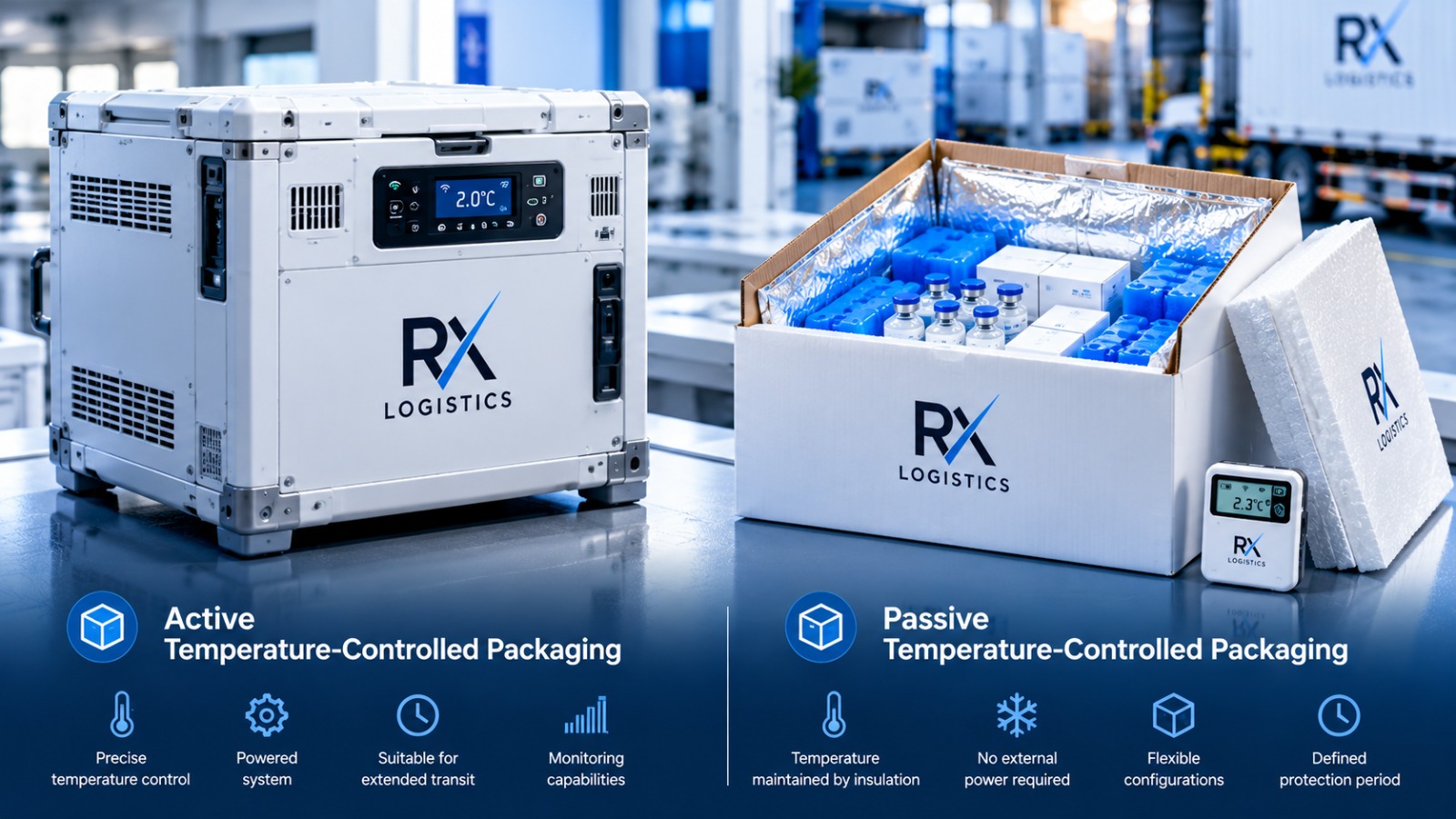
Two widely used approaches are active and passive temperature-controlled packaging. Although both are designed to help maintain specified temperature conditions, they differ fundamentally in engineering, operating requirements, and application profiles.
1. What Is Active Temperature-Controlled Packaging?
Active temperature-controlled packaging uses powered mechanical systems to regulate internal temperature conditions within a specialized shipping container. Active units incorporate refrigeration compressor units, electric heating coils, air circulation fans, and automated microprocessor control loops.
- • Thermostatic regulation: Constantly adjusts cooling and heating cycles to maintain target temperature regardless of external swings.
- • Extended duration capability: Capable of operating indefinitely as long as electrical charging or aircraft power is supplied.
- • Telemetry data integration: Integrated sensors capture internal temperature, ambient temperature, and battery charge levels.
- • Infrastructure dependence: Requires charging stations, maintenance access, ground handling power cords, and empty repositioning logistics.
2. What Is Passive Temperature-Controlled Packaging?
Passive packaging maintains internal thermal conditions through high-performance insulation and pre-conditioned temperature-buffering materials rather than active electrical machinery.
- • Zero electrical power required: Functions completely autonomously without batteries, power plugs, or mechanical parts.
- • Advanced insulation: Utilizes Vacuum Insulated Panels (VIPs) or expanded polyurethane (PUR) to minimize thermal conductance.
- • Phase Change Materials (PCMs): Engineered organic or paraffin waxes that absorb or release latent thermal energy during solid-to-liquid transitions.
- • Qualified finite duration: Validated for specific holding times (typically 72h, 96h, or 120h) against standardized ambient profile challenges.
3. Active vs Passive Packaging: Key Differences
| Parameter | Active Packaging | Passive Packaging |
|---|---|---|
| Temperature Regulation | Powered compressor/heater thermostat system | Insulation & pre-conditioned PCM / dry ice |
| External Power | Required for charging and maintenance stages | Zero continuous external power required |
| Transportation Duration | Extended periods, subject to battery / power | Finite validated window (typically 72h to 120h) |
| Handling Infrastructure | Requires certified stations, power outlets, plugs | Requires pre-conditioning chambers and SOP pack-out |
| Shipment Flexibility | Mainly full aircraft ULD pallets (e.g. RAP/RKN) | Flexible: parcel shippers, single box, to full pallet |
| Operational Focus | Equipment availability, positioning, battery levels | Pack-out accuracy, pre-conditioning rigor, lane time |
| Typical Applications | High-value commercial pharma, vaccines, bulk APIs | Clinical trials, biological samples, parcels, urgent kits |
4. Factors Influencing Packaging Selection
Neither solution is universally superior. A risk-based evaluation considers:
5. The Importance of Packaging Qualification
Packaging qualification provides documented evidence that a thermal shipper maintains the required temperature range under simulated real-world conditions (ISTA 7D/7E standards). However, qualification does not replace ongoing operational vigilance: pack-out SOP adherence and strict conditioning temperature protocols are mandatory.
6. How RX Logistics Supports Packaging Decisions
RX Logistics collaborates with leading packaging manufacturers to deploy certified active containers (RKN, RAP) and pre-qualified passive VIP shippers across all global lanes, matching your payload volume and temperature profile with precision.
Conclusion: Risk-Based Engineering
Effective thermal packaging selection is not simply a choice between two technologies. It is a risk-based engineering decision designed to preserve patient safety and product efficacy across every kilometer of the journey.